










This conversation is going on in multiple boardrooms in India right now between the head of HR or EHS and the CFO about the annual group mediclaim renewal. Premiums are higher again, and claims have increased year-on-year; therefore, the CFO is looking for an explanation about this cost increase. The CFO has also mentioned wellness programs run by the organization to the finance teams, who gave a polite but distinct silence back.
This is the main issue with how India’s large enterprises treat employee wellness. They have them, they pay for them — but they are not designed to move the economics of insurance.
The issue is not that the construct of a wellness program is wrong; but the design of the program is incorrect. A well-designed wellness program that has specific and identifiable intent, and a well-constructed health data infrastructure will lead to lower healthcare claim costs, and as a result, reduce the long-term costs of providing group insurance. The key word here is ‘designed well.’ The program should not be based just on distributing gym memberships at new-hire orientation and then completely disappearing by March. They should not be based only on having an annual health fair, then causing an overload of reports that no one reads. They need to be truly integrated so that they prevent major health problems from occurring across an entire employee population.
Let me explain how this works and why this is even more important to Indian enterprises than most HR leaders realize.
The Group Mediclaim Problems Are Really A Healthcare Problem
Currently in India the average group mediclaim premium increases are 10 – 15 % per year across all types of corporate medical portfolios. This trend appears to be a result of the post-COVID increase in usage of mediclaim, the significant increase in the number of employees with chronic diseases living within working age, and the approximate 2 – 3 times greater cost inflation in the healthcare sector (i.e., the increase in the healthcare costs has outpaced the cost of all other goods measured by the Journalism Consumer Price Index combined — on average 4 to 6% annually). Therefore, group insurance is a large fixed expense for the majority of manufacturers, public sector units (PSUs) and multi-location corporations, and similar to a few other fixed expenses, group insurance renewals compound each year.
One issue that many companies often overlook is that when it comes time to renew your company’s premium there will be two factors that affect the premium price; claims made against your employees’ healthcare and historical claims experience of your employee pool. Therefore, to avoid having to pay more than average for your premiums each year, the highest claims activity relative to the claims submitted to your employer’s insurance carrier comes from chronic illnesses (e.g., diabetes, hypertension, cardiac incidents, and musculoskeletal issues) and these diseases are often times not random events; they can be prevented, detected and/or managed if the right steps are taken.
The reason why preventive healthcare programs have a major impact on insurance is that they do not only assist members in reducing the cost of a claim after they have made a claim, but they also assist in reducing the number of times conditions arise that would cause a person to eventually file a claim.
What does it mean in practice to be “well-designed”? The parameter “Well-Designed” refers to the structural characteristics of wellness programs that drive claims-based results versus “decorative” HR programs.
1. They are based on health data (not just “participation” visibility) – In order for an employer’s wellness program to move claims-based results, it must be able to link the participation of its employees in health and wellness programs to their clinical health data. For example, an employer cannot expect to impact claims by tracking step counts if the employer does not have an understanding of the employee’s clinical health data, which would include longitudinal data on health risk indicators such as HbA1c, blood pressure and body mass index within their workforce. The only way to create a health improvement effect for a whole population of employees is to have a way to identify health risks for the whole population (i.e., do periodic, structured health check-ups, not only pre-employment physicals, so you can gather longitudinal data on the employee’s health risk indicators within your workforce).
2. They identify and intervene with high-cost/high-risk employees. For most employers, a very small percentage of employees (typically 5-20% of total employees) are responsible for the majority of medical claims costs (i.e., 80-95% of all medical claims). Much research has shown that approximately 20% of employees consume 80% of healthcare dollars; therefore, a well-designed corporate wellness program will segment the workforce by risk, identify this subset of employees early on, and provide targeted interventions (e.g. condition management support, specialist referrals, and mental health support) to these high-risk employees, before an employee’s risk crystallizes into having to be admitted to the hospital.
They link prevention with clinical care follow-through. The largest gap in the majority of corporate health check-up programs is how they address issues after an employee receives their health check-up report. If an employee has a flagged result (e.g., pre-diabetes, elevated blood pressure, high cholesterol); all they receive is their printed results (from the health check-up) with no follow-up action plan. Employees are left to simply “carry forward” until they file an insurance claim two years later. A properly designed program will create an effective pathway to provide care for employees with abnormal results by moving them into structured care pathways and providing a mechanism for tracking remediation. Properly designed programs will turn health check-ups from compliance theatre into a meaningful way for employers to manage their liability risk caused by employee health claims.
They are longitudinal and ongoing – they are not episodic in nature. A single annual health camp is NOT a wellness program; it is only a data point. For the insurance companies, there are long-term trends when examining claims data and these trends are a function of year-round engagement for the employee regarding their health – e.g., daily engagement through a Health Engagement application, health coaching with a health coach, chronic disease management at the OHC level, and periodic check-ins and screenings. It is through this continuous contact with employees regarding their health that the health of the workforce can be seen over the long-run as it is improved and will help the employer when developing their renewal strategy for the health plan.
Financial mechanics explain the relationship between claims reduction and savings on health insurance.
In India, group mediclaim prices are based on the loss ratio (the number of claims divided by premium paid) from the previous year. A favorable ratio results in better renewal terms from insurers; an unfavorable ratio results in increased premiums and/or underwriter exclusion. Preventive healthcare programs can affect the loss ratio directly in three ways. First, they reduce high-cost hospitalizations by identifying and treating individuals with health issues before their conditions develop into acute-care needs. Second, they reduce the average severity of claims by allowing for early-stage intervention, which is less costly to provide than emergency or end-stage treatment. Third, they provide the insurer with documented evidence of proactive health management that can be used when determining future rates.
Organizations that provide their insurance renewal discussions with a structure of wellness and occupational health data are increasingly obtaining a better negotiating position. They can demonstrate claims’ trends and enhancements associated with risk stratifications, and accurately represent their employees’ risk level as lower than might be indicated by their raw demographics. These represent major commercial leverage advantages for HR and finance teams that generally do not exist because they haven’t established a comprehensive data infrastructure to support this capability.
The India Specific Context: Additional Risks Faced by Industrial Workforces
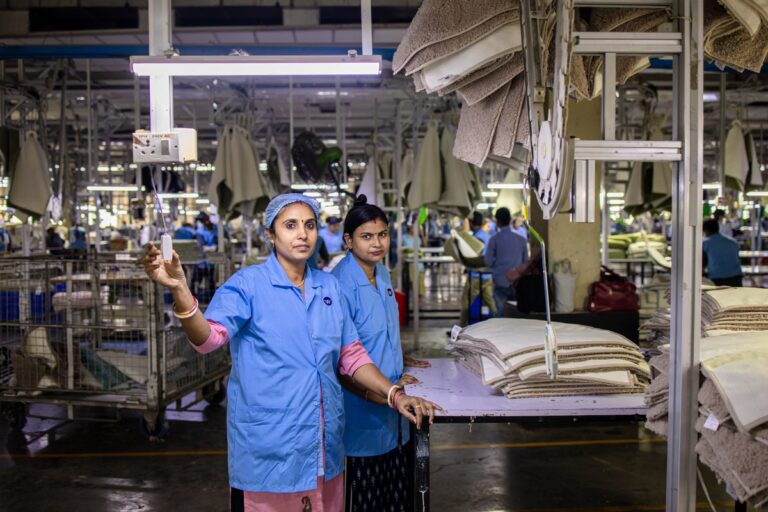
Workers in factories and plants in India face layers of additional occupational exposure risk that impact the cost of their insurance in ways that a generic wellness program can’t address. Workers in these industries experience occupational exposure to dust, chemicals, repetitive strain, noise, and heat stress that create health conditions that white-collar workers would rarely develop. Occupational respiratory diseases, hearing impairment, musculoskeletal conditions, and chronic toxicity from exposure are some of the health conditions found in industrial occupations. To assist in monitoring these exposures there is a requirement for factory workers to undergo mandatory health checks per the requirements of the Factories Act. However, in most organisations, health check records are typically maintained separate from the employee’s overall health and wellness programs; thereby producing compliance verifiable records without providing useful health information.
By putting together both occupational health and wellness programme data, we develop a much more comprehensive picture of the health risks to the workforce. If an employee is flagged for having an abnormal spirometry result in an occupational health check and also has elevated cardiovascular risk factors from their wellness check, that is an example of a compound risk that would not be identified by either programme alone. Proactively managing that risk is both a legal duty of care and a tool for reducing insurance costs.
How UNO.Care Creates the Framework to Generate Ongoing Reduction in Insurance Costs
For the majority of Indian companies, the primary challenge they face with corporate health and wellness programmes is not an issue of ‘awareness’, but rather the “capability of executing.” To run a true corporate health and wellness programme that will have a meaningful impact on the economics of their insurance, a company requires a technology infrastructure that very few companies have the human resources to build or operate.
UNO.Care is designed to fill this technology infrastructure void. It’s an AI-enabled Occupational Health and Employee Wellness platform that connects the entire health, wellness, and safety continuum for the employee population — pre-employment health assessments; periodic and statutory screenings; digital OHC management; health risk stratification; and employee engagement with wellness activities; all into a coherent, analytic system.
The UNO.360 Occupational Health and Safety Web platform produces population level health dashboards for the purpose of giving heads of Environmental Health and Safety, Chief Human Resources Officers (CHRO) and Plant Management the workforce health visibility to identify risk cohorts, track the outcomes of interventions and produce the type of longitudinal health data that will change the way organisations discuss their insurance renewal. The organisations using UNO.Care will not sit across the table from a renewal underwriter with nothing but the previous year’s claims report. Instead, they will come equipped with structured health trends, risk segmentation analysis and documented records for preventive interventions, resulting in a fundamentally different negotiating position.
The employee health app provides a means to extend wellness engagement into the daily routines of the workforce making preventive health care programmes available and continuous rather than episodic. Additionally, the NABL/NABH partner diagnostic ecosystem ensures that the quality and integrity of check-up health care data meets the standards to ensure the analytics generated from this data can be credible both within an organisation as well as to the insurance industry.
For organisations that operate in multiple manufacturing sites, offices and plants, the PAN India health checkup infrastructure of UNO.Care addresses the operational complexity frequently associated with multiple site wellness programmes leading to inconsistent implementation of these programmes. Inconsistently implemented wellness programmes have the potential to jeopardise the integrity of data, which is the basis for the entire argument for reducing insurance costs.
Creating The Case For An Internal Business Case
HR & EHS leaders should present this business case in a financial management perspective to both operations and Finance leaders as an “insurance cost management strategy” versus simply framing it as the cost of wellness.
In terms of establishing this comparison, consider your groups’ annual mediclaim premium on per employee basis, your group’s current claims incidence and average severity; how much can you save on next year’s renewal if your group experiences a 10-15% reduction in the amount of high cost claims (i.e., cardiac, diabetic, musculoskeletal)? When you are modelling these numbers conservatively, the majority of the time that there is a clear case of a properly resourced, corporate based wellness and occupational health infrastructure by solely quantitative (i.e., Financial) measurements. Once you include additional benefits such as increased productivity, decrease time/attrition, and comply with workers comp regulations, the case becomes even more clear, regardless of what the monetary benefit will be to your organization.
Companies that are winning their case internally are those that have moved away from treating wellness as a soft “HR” benefit and instead are now treating wellness as a healthcare infrastructure investment with a quantitative return on insurance (financial)economics. Changing this definition has altered the entire dialogue regarding wellness.
Conclusion: The Compound Benefits of Doing This Correctly
Insurance premiums do not adjust due to good intentions; they adjust based on claims data only, which over time, reflects the health trajectory of your workforce. Also, the health trajectory of your workforce (the claims data) is directly proportional to whether your employee wellness initiative is designed to actually make a difference in employee health outcomes on a massive scale.
In lieu of the above, corporations that implement robust and strategically designed programmatic wellness initiatives that are based on preventive health care (e.g. diet, exercise, psych well being), utilize effective health data to measure the achievement of the intended outcomes, and utilize the proper amount of clinical follow-through, will be able to achieve reduced cost associated with insurance premiums.
Corporations will continue to see measurable reductions in their insurance costs over the long haul due to the improvement in the health of their employee population because of the implementation of these programmatic wellness initiatives.
However, the key to successfully reducing the costs associated with employee health insurance is not getting it “perfect” the first time. It’s building the infrastructure necessary (right health data system; right diagnostic network; right operational model) so that employees engage in preventive health care throughout the course of the year.
UNO.Care exists to help you build these necessary infrastructures. If you are interested in turning your employee wellness investment into a meaningful long-term cost lever for your insurance premiums, contact us today about scheduling a demo of our solutions.