







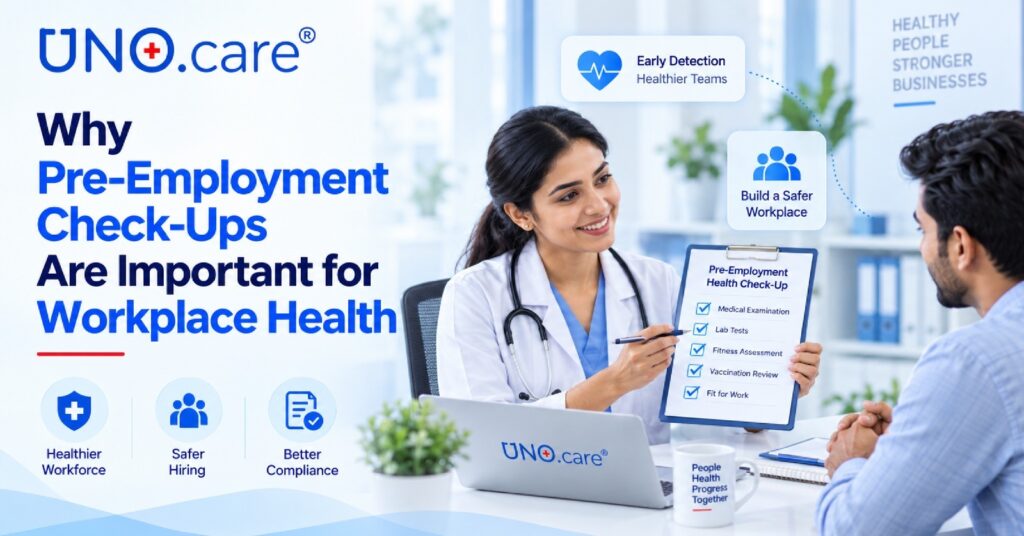
Hiring usually focuses on qualifications, experience, background checks and whether a candidate seems right for the role. One question often receives attention much later: is the person medically fit for the work environment they are about to enter?
A pre-employment checkup helps answer that question before the employee starts work. Done correctly, it is not about searching for reasons to reject candidates. It is about understanding fitness for a specific role, identifying health considerations that may require support, establishing an initial health record and making workplace health planning more informed.
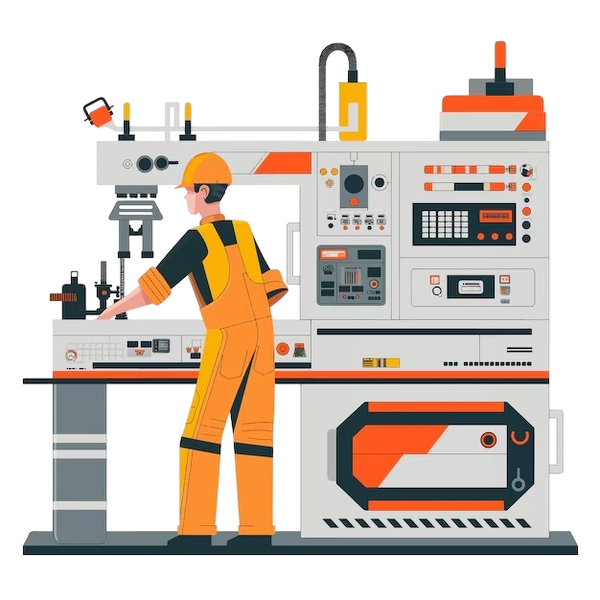
That distinction matters. A desk-based employee, a warehouse operator and a worker entering a chemical plant do not face the same occupational demands. Treating their health assessments as though they do can leave both employees and organisations poorly prepared.
For employers trying to build a safer and more structured employee health programme, pre-employment screening is therefore much more than a joining formality.
What Is a Pre-Employment Checkup?
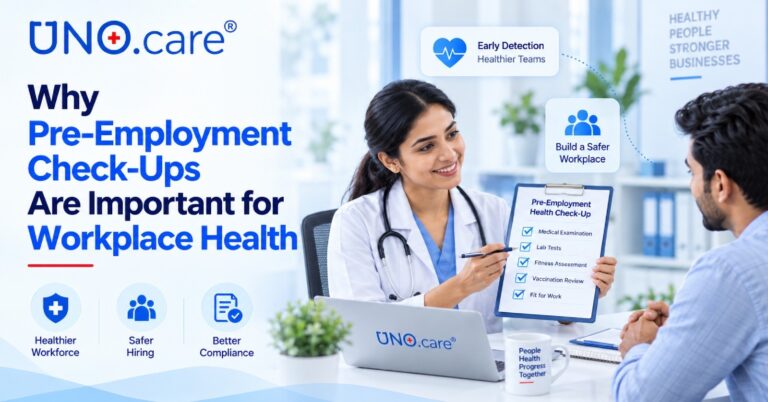
A pre-employment checkup is a health assessment conducted before an employee begins a role, usually to determine whether the person is medically suited to the work and workplace conditions involved.
The exact assessment can vary substantially by industry, role, age, occupational exposure and organisational requirements. It may include a physical examination, review of medical history, basic laboratory investigations, vision assessment or other job-relevant tests.
This is where employers need to avoid the temptation of using one standard package for everyone.
International Labour Organization guidance supports a hazard-based approach: medical examinations should be relevant to the workplace risks involved, while health information should be handled with appropriate confidentiality and should not become a tool for discrimination.
That is also why an effective pre-employment medical checkup should be designed around the job rather than simply around the number of tests included.
A production-floor role involving noise, dust or chemicals, for instance, may warrant assessments that would add little value for an employee working in finance from a corporate office.
The Importance of Pre-Employment Health Checkup Goes Beyond Hiring
The real value of screening becomes clearer when employers stop looking at it purely as a recruitment activity.
Consider a manufacturing company hiring hundreds of employees for a new facility. If every candidate is sent for the same basic test panel, the company may complete its recruitment checklist, yet still fail to capture health indicators relevant to actual workplace exposures.
Now imagine the same organisation maps health assessments to job roles and risks before deployment. It begins employment with better baseline information, clearer fitness documentation and a much stronger starting point for future occupational health monitoring.
That difference explains the importance of pre-employment health checkup programmes in mature workplace health systems.
Here are some of the areas where they create practical value.
Establishing a Baseline Health Record
A baseline gives occupational health teams something meaningful to compare against later.
If an employee subsequently works in an environment involving dust, chemicals, high noise levels or other occupational exposures, historical health information may help medical teams understand how certain health indicators have changed over time.
This does not mean every future health issue can be attributed to the workplace. It means employers and occupational health professionals start with more context instead of trying to reconstruct it years later.
Express Clinics similarly identifies the creation of baseline health information as one of the practical purposes of pre-employment screening.
This becomes particularly relevant when the organisation also conducts periodic or annual employee health checkup programmes.
Matching Health Assessments With Job Demands
Medical fitness should not mean the same thing for every employee.
A commercial driver needs capabilities different from those required by a software engineer. Someone working around high noise exposure may require different monitoring from an administrative employee. The health risks in mining, chemicals, logistics, food processing and IT also differ dramatically.
A good medical fitness test therefore asks a practical question: is the individual medically suited to safely perform the essential requirements of this particular job?
The emphasis should remain on fitness for work and appropriate workplace support, rather than treating every health condition as a hiring barrier.
This role-based approach is increasingly recognised internationally. NHS Employers, for example, describes work health assessment as a process for assessing whether an individual will be suitable for the role and working environment concerned.
Key Benefits of Pre-Employment Medical Checkup for Employees
Employers naturally look at risk and compliance, but candidates also have something to gain.
One of the most overlooked benefits of pre-employment medical checkup for employees is simply awareness. A health assessment may draw attention to indicators that an individual has never previously investigated or may highlight whether a particular work environment requires additional medical consideration.
For example, the result might lead to advice about corrective eyewear, hearing protection, respiratory precautions, further medical evaluation or another reasonable workplace measure.
There is another benefit that receives less attention: employees begin their relationship with the organisation knowing that occupational health is being treated systematically.
That can be particularly valuable in industries where workplace exposures are real rather than theoretical.
For employers, meanwhile, the benefits may include better health documentation, more appropriate deployment decisions, clearer occupational-health records and a more organised transition into periodic health monitoring.
These benefits of pre-employment medical checkup for employees are strongest when the programme is designed as part of long-term employee health management rather than operated as an isolated recruitment exercise.
What Does a Pre-Employment Medical Checkup Usually Include?
There is no sensible universal test list that every company should copy.
Common assessments may include a medical history review, physician examination and selected laboratory or diagnostic tests. Existing corporate screening programmes in India commonly include combinations of blood tests, urine investigations, vision screening, ECG, chest imaging or other assessments depending on the package and job requirements.
The more useful approach is to divide tests into two categories: general health assessment and job-specific evaluation.
General Health Assessment
Depending on organisational requirements and medical guidance, this may assess basic health indicators such as blood pressure, BMI, general physical condition and selected laboratory parameters.
The objective is to establish useful medical information, not simply increase the number of tests in the package.
Job and Hazard-Specific Tests
Additional assessments should be considered where occupational demands justify them.
Someone exposed to high noise levels may require hearing assessment. A role involving respiratory exposure may require appropriate respiratory evaluation. Work involving significant physical demands may call for a different fitness assessment.
PrognoHealth’s current pre-employment packages, for instance, vary across office and manufacturing requirements and include different combinations of cardiology, radiology, laboratory and occupational assessments.
This is why procurement teams and HR leaders should be cautious about comparing healthcare providers only by package price or test count.
More tests do not automatically mean a better programme. More relevant tests do.
A Medical Fitness Test Should Not Become a Checkbox
There is a familiar HR scenario.
A candidate is asked to visit a diagnostic centre. Tests are completed. A PDF arrives by email. Someone downloads it and places it in a folder. The candidate joins.
Technically, a health check happened.
Operationally, almost nothing was learned.
A well-designed medical fitness test should form part of a clear process: which tests apply to the role, who reviews them, how fitness is reported, how confidential information is handled and what happens when medical follow-up is recommended.
The organisation should also know what the final fitness outcome means.
For most HR teams, detailed medical information should not become another spreadsheet to interpret. The employer needs an appropriate fitness outcome and the occupational-health guidance necessary to manage the employee safely. Detailed medical data requires far more careful handling.
ILO occupational-health guidance explicitly recommends protecting confidential health information and limiting what is communicated to employers to relevant fitness conclusions rather than unnecessary medical details.
That is an important principle for any employer designing a modern screening programme.
Why One Standard Health Package Can Create Gaps
Imagine two candidates joining the same enterprise.
One will work in accounts at the corporate office. The second will spend eight hours a day in a manufacturing environment.
Should their assessments be identical?
Probably not.
Yet this is exactly what happens when organisations purchase a generic health package and deploy it nationally without mapping tests to occupations and workplace exposures.
The importance of pre-employment health checkup design lies in that mapping.
UNO.care highlights the same issue in its corporate health programmes: generic test lists can miss role-specific risks, while programmes designed around occupational hazards allow screening to reflect the environment employees actually work in.
The goal should therefore be relevance, not simply standardisation.
Standardise the process, reporting, documentation and quality benchmarks. Customise the clinical assessment where the job requires it.
Pre-Employment Screening Should Connect With Employee Health Checkups
Pre-employment screening is most useful when it becomes the first point in a longer employee-health journey.
The next stage may include periodic occupational health assessments, an annual employee health checkup, onsite health programmes, Occupational Health Centre support or monitoring related to specific workplace exposures.
This creates continuity.
Instead of health information being scattered across laboratories, spreadsheets, emails and paper certificates, the organisation can build a more coherent health record across the employee lifecycle.
That becomes especially important for large organisations operating multiple plants, branches or states. Without central visibility, one location may follow a completely different process from another.
And once that fragmentation begins, HR and EHS teams spend more time following up with vendors than actually managing workplace health.
How UNO.care Simplifies Pre-Employment Health Management
For a company hiring across locations, arranging medical appointments is rarely the hardest part. Coordination is.
Different laboratories may follow different processes. Candidate reports arrive in different formats. HR teams chase pending tests. Joining dates depend on fitness certificates. Site teams struggle to maintain consistent documentation.
UNO.care approaches the problem as an end-to-end employee health programme rather than a collection of disconnected medical tests.
Its health-checkup platform supports executive, occupational, onsite and pre-employment screenings while helping organisations manage programmes across locations through one system. UNO.care also works with NABL/NABH-certified diagnostic partners and provides centralised visibility into screening progress and reports.
For HR and EHS teams, that means the pre-employment checkup can be configured around role and workplace requirements instead of forcing every candidate into the same generic panel.
It also creates natural continuity with UNO.care’s other workplace-health services, including corporate health checkups, annual health checkups, diagnostics, Occupational Health Centre staffing and OHC management.
The result is a simpler model: one health partner, clearer workflows and better visibility from pre-joining health assessment through ongoing employee health management.
Build Workplace Health Before the First Working Day
A strong workplace health programme does not begin after an employee becomes unwell. It begins with understanding the health requirements of the job and creating the right baseline from day one.
That is what makes a thoughtfully designed pre-employment checkup valuable.
For employers, it supports more structured occupational health planning, role-relevant screening and cleaner health documentation. For employees, it can provide useful health awareness and help ensure that the work environment is appropriate for their medical needs.
Most importantly, it gives organisations a better foundation for everything that follows.
If your organisation is managing hiring across multiple offices, factories or locations, UNO.care can help you build a consistent, role-specific pre-employment screening programme and connect it with your wider employee health and wellness strategy.
Speak with the UNO.care team to simplify pre-employment health checkups across your workforce.