













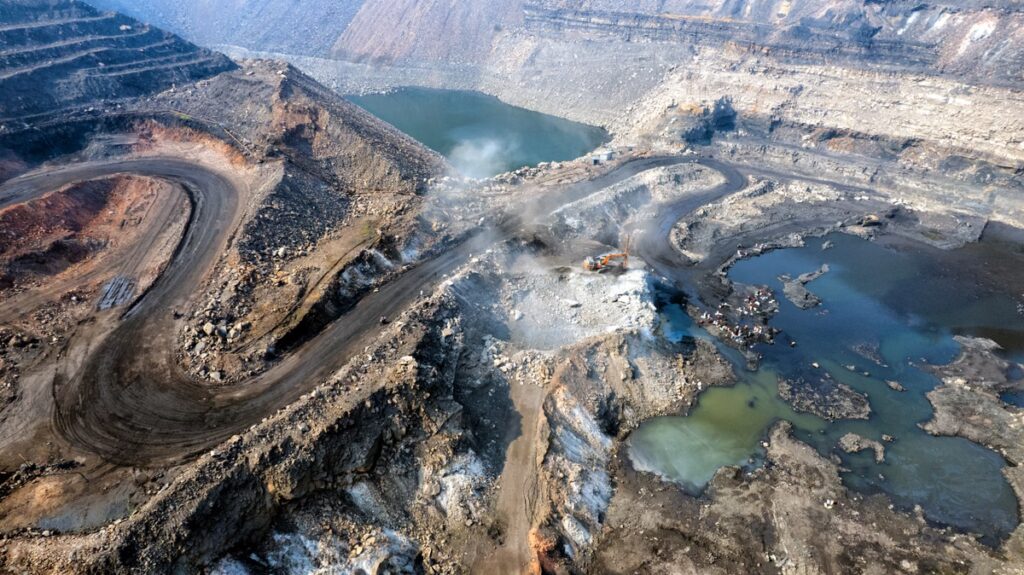
The Mines Act 1952 predates India’s independence and is one of the most comprehensively prescriptive pieces of workplace health legislation on the books. Mining companies that treat it as an outdated formality are routinely penalised by the Chief Inspector of Mines — and increasingly face criminal prosecution for serious violations.
The Five Mandatory Examination Points
1. Initial (Pre-Employment) Examination
Before any person is employed in a mine, they must be examined by a certifying surgeon appointed under the Mines Act. The examination includes: general physical assessment, respiratory fitness (spirometry and chest X-ray), cardiac assessment, vision and colour vision, audiometry, and blood investigations. A person found medically unfit for underground work can be employed in surface operations if medically cleared for those.
2. Annual Periodic Examination
Every mine worker must be re-examined at least once every 12 months. For workers in high-dust environments, many regulatory authorities expect 6-monthly chest X-ray surveillance for pneumoconiosis (coal worker’s lung disease). The annual exam must be conducted by the same category of certifying surgeon as the initial exam.
3. Transfer Examination
When a worker is transferred from surface to underground work, or between different hazardous areas, a new fitness assessment is required. This is particularly important when transferring workers to areas with different dust profiles.
4. Return-to-Work Examination After Illness
A worker absent for more than 14 days due to illness or injury must be examined by the mine’s medical officer before returning to underground work. Conditions that make underground work hazardous (respiratory compromise, cardiovascular disease, medication-induced vertigo) can develop during an illness episode.
5. Exit Examination
At the cessation of employment, the worker is entitled to a medical examination documenting their health status at the time they leave. This exit record is critically important: it establishes whether any occupational disease was present at separation, which affects both compensation claims and the company’s legal exposure.
Dust Monitoring: The Obligation Most Mines Underinvest In
The Mines Act requires regular monitoring of airborne dust concentrations in underground work areas. Monitoring must be conducted at prescribed frequencies, with results recorded against the threshold limit values for each type of dust. Where concentrations exceed limits, engineering controls must be implemented and documented before workers can return to the area. Many mining operations conduct dust monitoring but fail to document the connection between monitoring results and control measures — which is what an inspector actually wants to see.
First Aid and Rescue Requirements
Every mine must have a first aid room staffed by a trained first aider during every working shift. Mines above a specified size must have a mine rescue station with rescue equipment and trained personnel. Failure to maintain these is a criminal offence under the Mines Act, with the manager of the mine personally liable.
Occupational Disease Surveillance: The Full Scope
Beyond the five examination points, the Mines Act establishes a comprehensive occupational disease surveillance system that many operators incorrectly view as optional. The Chief Inspector of Mines expects to find, in any inspection, a functioning surveillance system that can demonstrate longitudinal tracking of workers’ health across their career in the mine.
The diseases that must be actively surveilled include: coal workers’ pneumoconiosis (black lung), silicosis, asbestosis (in applicable mines), noise-induced hearing loss (NIHL), and vibration-induced white finger. Each of these has a different latency profile, different exposure threshold, and different examination protocol. A single annual chest X-ray, while mandatory, is insufficient for mines with mixed dust profiles or high-vibration equipment.
Silicosis Surveillance Specifics
Silica dust is present in most hard rock mines. Silicosis has a shorter latency period than coal dust pneumoconiosis — workers can develop early silicosis within 5–10 years of high-exposure work. The surveillance protocol requires: high-resolution chest CT for workers with more than five years’ underground exposure, annual spirometry with comparison to baseline, and biological exposure monitoring where dust engineering controls cannot reliably maintain levels below the threshold limit value of 0.1 mg/m³ (respirable fraction).
Noise-Induced Hearing Loss (NIHL) Monitoring
Underground mining is one of the highest-noise occupational environments in India. NIHL is irreversible but entirely preventable with proper monitoring and hearing protection programmes. Mandatory audiometry at intake, then annually for workers in areas where noise exposure exceeds 85 dB(A) for eight hours, is required. The audiogram must be read and signed by an ENT specialist or audiologist, not simply filed as a printout. Workers showing early NIHL must be repositioned to lower-noise areas — this is a legal obligation, not discretionary HR practice.
Record-Keeping: What the Act Actually Requires You to Retain
Section 22 of the Mines Act and the Mines Rules 1955 specify record-keeping obligations that go beyond simply keeping examination results on file. The requirements include:
Form D — Health Register: A permanent record for every worker, containing all medical examination results across their entire career in the mine. This register must be kept for 40 years after the worker leaves employment — not the frequently cited three years, which is only the minimum for active-employment records.
Form E — Accident and Ill-Health Register: Every incident of ill-health or injury, however minor, must be recorded at the time it occurs. The registrar (typically the mine safety officer) must sign each entry. Retrospective entries, even if accurate, are treated as evidence tampering in enforcement proceedings.
Dust Monitoring Records: Results of all dust monitoring surveys, including the date, location, equipment used, operator name, result in mg/m³, and the action taken where results exceeded permissible limits. These must be available for a minimum of five years.
Competency Records for Medical Personnel: Proof that all persons conducting examinations — including nursing staff performing audiometry or spirometry — hold the requisite qualifications and any required registration under the Mines Act.
DGMS Enforcement: What Inspectors Actually Find
The Directorate General of Mines Safety (DGMS) conducts over 6,000 inspections annually across Indian mines. Their annual reports consistently identify the same categories of health-related violations. Understanding these is the most efficient way to assess your own compliance gaps.
Top DGMS Audit Findings (2022–2024)
| Finding | Frequency | Typical Outcome |
|---|---|---|
| Medical examination records incomplete or missing | Very High | Prohibition order, criminal notice to manager |
| Certifying surgeon not designated or not present for examinations | High | Invalidation of all recent examinations, show-cause notice |
| Dust monitoring not conducted at required frequency | High | Stoppage of operations in affected area |
| First aid room not adequately staffed during all shifts | Medium | Improvement notice, follow-up within 30 days |
| Exit examination not conducted for separated workers | Medium | Register discrepancy notice, civil liability exposure |
| NIHL-affected workers not redeployed | Medium | Compensation liability, criminal referral |
| Form D (Health Register) not maintained per format | Very High | All affected records treated as non-compliant |
The “Paper Compliance” Problem
DGMS inspectors are increasingly adept at distinguishing between genuine compliance and paper compliance — where records exist but the underlying health surveillance is not actually functioning. Red flags that trigger deeper scrutiny include: all examination results clustered at a single date per year (suggesting batch-processing rather than genuine assessment), identical spirometry values across multiple workers (suggesting equipment calibration issues or false recording), dust monitoring results consistently just below the permissible limit (suggesting results are being reported to specification rather than measured), and examination records for workers who were not actually present on the examination date (a serious criminal offence).
Technology Solutions for Mine Health Compliance
The scale and complexity of Mines Act health surveillance — five examination types per worker, multiple occupational disease protocols, 40-year record retention, multi-shift operation — makes manual systems almost inevitably non-compliant at any significant mine. The mines that consistently pass DGMS inspections without enforcement action are, almost universally, operating digital health management systems that automate scheduling, capture examination results in structured form, flag overdue examinations, and generate DGMS-format reports directly.
Key capabilities for a mines health management system include: automated examination scheduling across all five exam types with DGMS-format output, digital Form D and Form E maintenance with audit trail, dust monitoring data integration with action-trigger alerts, certifying surgeon appointment tracking, audiometric and spirometric trend analysis per worker, and exit examination workflow that cannot be bypassed without supervisor authorisation.